Sometimes you just don’t know what you’ve got until it’s (almost) gone!
When it comes to church property, it can be easy to overlook its fundamental importance to our ministry. But for one parish, a brush with disaster led to not only some much needed upkeep, but a new appreciation for their property.
The result? A well-located and maintained property that will serve one of Sydney’s most vulnerable communities for generations to come.
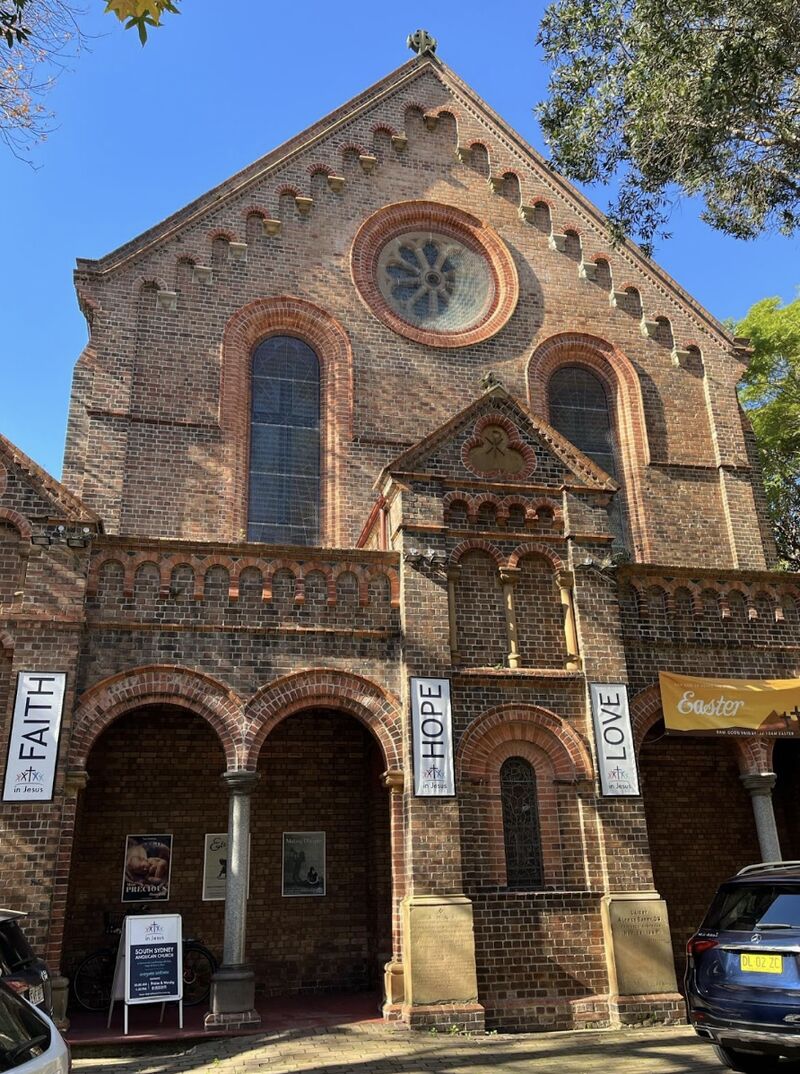
In 2019, major structural issues were identified at South Sydney Anglican Church in Redfern. Now, after quite a journey, and thanks to the diligence of the church’s staff, wardens and parish council, along with support of Sydney Anglican Property (SAP), work to restore the site for ongoing ministry is now (spoiler alert) complete.
SSAC was built in 1885 and designed by Arthur and Cyril Blackett in the Victorian Romanesque style of architecture.
Located directly opposite the social housing towers that dominate the skyline of Redfern, the ministry of the church has long been focused on the one of the most socially disadvantaged demographics in Sydney’s inner south.
“We’ve always had a large percentage of our ministry efforts going towards that demographic,” says Rev Matt Johnson, the senior minister at SSAC. “Often they are dealing with significant issues such as mental illness, addiction, criminal records, long-term unemployment and other things. We do a lot of intentional ministry with them.”
The church is committed to being strongly evangelistic, and runs well-attended drug and alcohol programs every week. The church also works with OZHarvest to distribute several tons of food each week to people living in social housing or on the streets. Matt is thankful for the work of the mature Christians in his church who embrace the complexities of ministry in this community.
Matt’s previous ministry job might seem like strange preparation for working at an inner-city church – he came to SSAC from ministry in outback Western Australia. But the two churches have more in common than you might think.
“I was originally asked to come to this church by Archbishop Peter Jensen,” Matt shares. “He knew I had an understanding of working in ministry with Indigenous Australians because of my experience in Western Australia.”
As well as being well suited for the ministry challenges, another unexpected aspect of Matt’s background also prepared him for his role at SSAC – his background in the building industry. When he arrived in 2010, the parish and its heritage listed church building were in a difficult spot. It was a provisional parish, meaning it was under the supervision of another church, due to the church being unable to financially support itself. And, on top of that, the building itself was in need of significant investment to make it sustainable for the future.
So when Matt arrived, the wardens and parish council of the church began the process of putting together a long-term plan to restore and care for the building.
But suddenly the timeline was sped up: a storm in 2019 washed a large amount of lime mortar from between the bricks on the eastern wall. Sunlight was visible between the brickwork and piles of sand lay inside the church building.
“We’d actually already come up with a completely different plan of how we were going to restore the building,” Matt says, explaining a plan to build a number of terraces and use the income from leasing these to support the church. “We were even talking to a town planner in the City of Sydney Council about it. But then we had a huge storm, and suddenly there’s water literally being blown through the bricks because the mortar had broken down so much. So we got an engineer to come and do an assessment on the property and he said, ‘realistically this is becoming structurally unsafe. I give you 12 months to address it otherwise it will have to be deemed structurally unsafe’.”
Matt describes himself as going into ‘autopilot’ with all the processes and paperwork that suddenly had to take place. The decision about when and how to restore was suddenly made for them, and all they could do was figure out how to finance it. SSAC is not a wealthy church, and calling on the congregants for extra generous gifts was not likely to make a large dent in the million-dollar cost of restoration.
That was where the Anglican Church Property Trust, now part of SAP, was able to step in and help.
“There was really no choice. We needed the money to fix it, or the doors would be closed, and the church would lose the opportunity to minister to this group of socially disadvantaged people,” Matt says.
SAP was able to help by working with Standing Committee to release funds to ensure the work was able to begin immediately.
Work was able to begin – but then encountered a new roadblock as the COVID-19 pandemic reached Australia. The pandemic had a significant impact on the Australian building industry, with many companies unable to survive financially. The planned timeline for the SSAC restoration project was now no longer possible.
A job planned to take ten months instead took two years to be completed. The only advantage was that the period of time the church was inaccessible because of scaffolding, coincided with the time period that the church was meeting online due to the pandemic.
Matt was also thankful that as well as his own background in the building industry, many of his wardens had relevant experience that made the back and forth with builders, which was not always smooth, much more manageable. “One is very experienced in property development, another has an electrical background. Another warden actually does heritage related landscaping and works in the heritage field. So we were all quite comfortable dealing with the building process.”
When issues arose with the project manager and builder, Matt and the wardens were also able to recognise and solve the problem before it escalated.
Thanks to God’s grace, the wonderful stewardship of the parish reps and a little help from SAP, work is now complete, with brickwork and windows restored and some other improvements to drainage and foundations to prevent future damage.
The building doesn’t look too different from the outside now that work has finished – a bit prettier and tidier, maybe. But the building doesn’t leak anymore and is safe and secure, which, as Matt points out, is the real benefit. “The value we’ve added is that it lasts for another hundred years. It’s ministering to people now, and into the future,” Matt says.
If the church had closed its doors as a result of the building no longer being safe, it would have had a significant impact on the surrounding community, Matt says. “Especially for the socially disadvantaged, they view our church as a safe space, a place where they are cared for, a place they can come to for help, and a place where they know people will love them,” Matt reflects. “And for the people we’re ministering to, that is quite meaningful, because they don’t feel as comfortable walking into churches in other contexts a lot of the time.”
SSAC is no longer a provisional parish, and their ministry has been able to continue and grow. While the SSAC building is now restored and saved for many generations of gospel ministry, many other churches, particularly in the inner city, face similar challenges. The complications of small congregations managing heritage buildings with incredibly expensive costs for maintenance and restoration means that wisdom and good stewardship are crucial.
“Trying to keep ministry going and also meet the building costs at the same time is not straightforward,” Matt explains. “My advice for those churches would be to recognise that there is a stewardship responsibility, and to the best of their ability just continue to tick things off in an orderly and strategic way, so the building can be managed as best they can with limited resources.”
But it’s not just Matt who thinks it’s a good idea. Standing Committee has introduced a number of requirements for property maintenance and budgeting that parishes need to be aware of – in particular the need for rolling 3 to 5 year financial and property plans.
The good news is that SAP’s Regional Property Managers are here to help with all of that, and much more. We’ve even developed some helpful online tools – such as a Contents Register and a Property Maintenance Schedule – for parishes to use in managing their maintenance tasks and budgets. Those with a login to the Parish Admin site can access them here.
Finally, just like they did at SSAC, don’t be afraid to lean members of your church with experience in the building industry. Not only when you have a major building project, but for the day by day, week by week maintenance plan that can save millions over time. And potentially avoid a much bigger disaster! So was it money well spent? Matt Johnson is sure that it was. “From a kingdom perspective it would have been a very significant loss for the doors to close.”